
Grant County Parole Versus Probation
Parole and probation both place a person in the community under rules, but they start in different ways. An Oklahoma court orders probation as part of a suspended or deferred sentence under 22 O.S. § 991a. Parole follows confinement in the state prison system and covers the balance of the sentence after the parole process. A person on either form of Grant County supervision is outside jail, yet has not necessarily completed every part of the sentence.
The agency split matters. The Oklahoma Pardon and Parole Board, or PPB, handles parole hearings and decisions. Oklahoma Department of Corrections Probation and Parole Services provides field supervision. The Board does not serve as the local supervision office. Grant County court records explain probation orders, while ODOC status and PPB results explain state parole. A Grant County Jail release on bond is neither parole nor probation unless a separate order or state status says so.
| Point | Parole | Probation |
|---|---|---|
| How it begins | Conditional release after state imprisonment | Court-ordered community supervision tied to a suspended or deferred sentence |
| Decision source | PPB process, and in some cases action by the Governor | Grant County District Court judgment or later order |
| Who supervises | ODOC Probation and Parole Services | ODOC Probation and Parole Services when assigned |
| Best verification | ODOC identity and status, PPB result, then field office | Court docket and judgment, ODOC status, then field office |
| How it ends | Completion or formal discharge shown by the controlling state record | Completion, discharge, or the court result provided by law and the judgment |
- Parole
- Conditional community release for the remaining part of a prison sentence.
- Probation
- Court-ordered supervision in place of all or part of confinement.
- Discharge
- Formal completion of the sentence or supervision shown in the official record.
- Absconder
- A person alleged to have stopped complying with supervision or reporting requirements.
Verify Grant County Post-Release Supervision
Start with identity, not a name alone. The ODOC Offender Lookup accepts an ODOC number, first and last name, and date of birth. It also offers alias and similar-sounding-name options. Compare the ODOC number, age or birth information, offense, and photograph when shown. A status of parole or probation supports community supervision. An incarceration status means the person is not released from that state placement, while an inactive or discharged history must be read as stated rather than guessed.
A Grant County resident can be supervised after a case from another county, and a person sentenced in Grant County can report elsewhere. The assigned office is therefore a verification point, not proof based on residence. Follow this sequence:
- Search ODOC by number when known. Otherwise use the exact legal name and date of birth, then resolve similar names with stable details.
- For probation, open the Grant County court docket and read the judgment, suspended or deferred portion, later modifications, and any revocation entries.
- For parole, search the PPB monthly docket and matching results by both name and ODOC number. A docket listing only shows scheduling.
- Read the outcome precisely. A pass, recommendation, grant, eligibility date, and actual release are not the same event.
- Confirm the active reporting office with ODOC Probation and Parole Services. Ask whether Ponca City or another office now holds the case.
- For a completed term, seek the Certificate of Release or state sentence history instead of assuming silence means discharge.
For the broader county release trail, the Grant County released-inmate search and record path shows how the Sheriff record, court docket, and ODOC system fit together. Those sources prevent a transfer into ODOC from being mislabeled as community release.
Grant County Parole Office Routing
The official ODOC list assigns Grant County to the Ponca City Probation and Parole office. That office also covers Kay County and northern Noble County. ODOC separately lists an Alva suboffice with broad coverage. Because office boundaries and individual assignments can change, call Ponca City first and ask staff to confirm the current route. Do not assume the nearest office or the office named in an old record still manages the case.
ODOC Probation and Parole ServicesPonca City Office
205 W. Hartford, Suite 124
Ponca City, OK 74602
580-765-1603
The office can confirm routing within the limits of public access. It should not be asked to disclose a private home address, private contact information, or case details that law or policy protects. The most useful request names the person, provides the ODOC number if known, and asks which public office or record can confirm active Grant County parole or probation.
For state proceedings, ODOC supervision and PPB action remain separate. A hearing calendar or result comes from the Board. Reporting and compliance are managed by ODOC. The physical release event belongs in ODOC release records. That three-part split is the safest way to read Grant County post-release supervision.
Note: No published office hours were identified for the Ponca City unit, so call before traveling.
Grant County Parole Board Results
The PPB dockets and results archive is organized by year and month. Search the docket PDF by exact name and ODOC number, then open the matching result after the meeting. A docket entry means the case was placed for action. It does not show parole approval or release. Posted results can show grant, recommendation, pass, or denial. A pass moves the issue rather than granting release.
Authority also varies. For a nonviolent offender, the Board may grant parole. For a violent offender, favorable Board action may be a recommendation that still requires the Governor's decision. The process requires three affirmative votes. Parole eligibility under Title 57 and an approved action still do not establish the exit date, because conditions, processing, a detainer, or another legal step can intervene.
The official archive gives useful context for a Grant County parole record.
The PPB docket and results archive provides the source view used to identify its year-and-month layout.
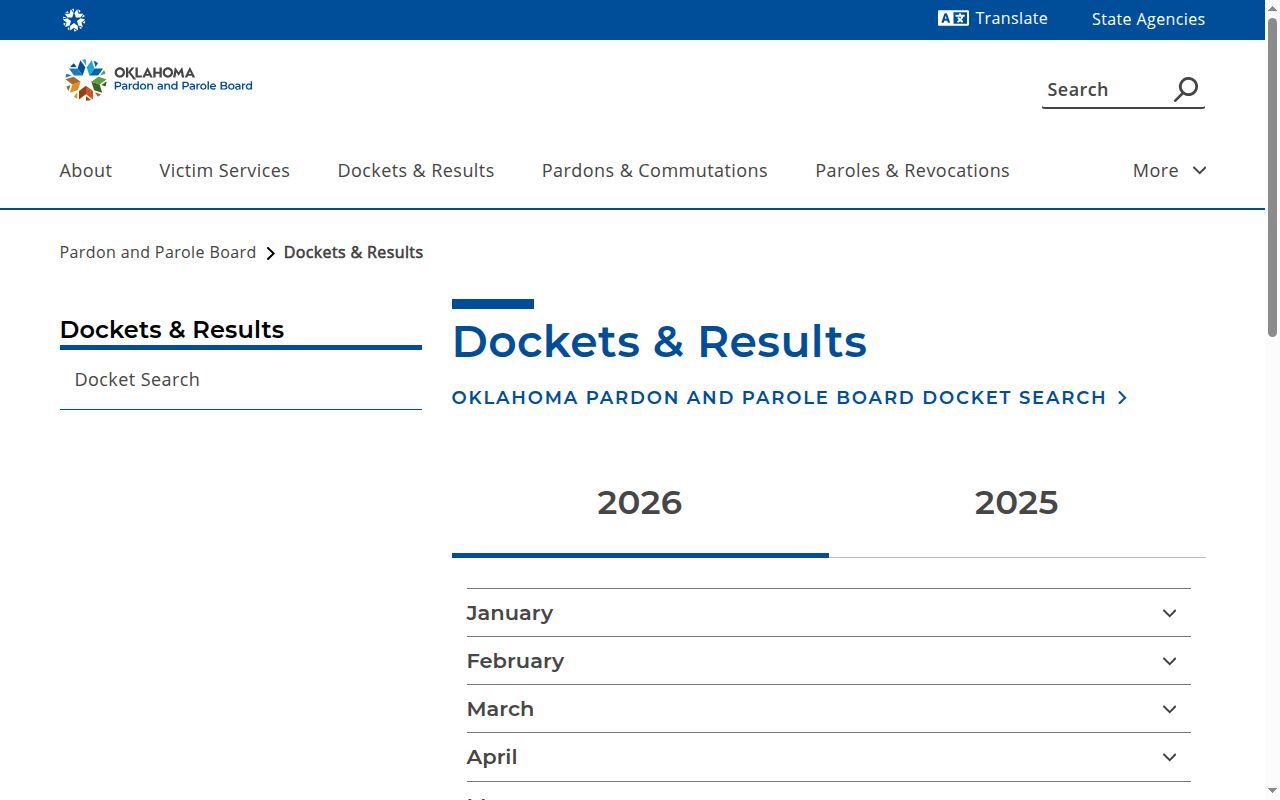
The archive screenshot shows the source structure, but the matching result and ODOC release record control the conclusion for a person.
Grant County Absconder Record Safety
ODOC maintains a distinct fugitive and absconder search. A matching listing can show an alleged supervision problem and warrant path after a person was released. It does not prove a new conviction. It also does not prove the person is now in prison or at a known place. The result should be matched with the same care used for the main offender search.
Never approach, follow, detain, or try to question a listed person. Contact law enforcement or the ODOC Fugitive Warrants Division at 405-425-2570, 405-425-2571, or 866-363-1119. Email is available at warrants@doc.ok.gov. Emergency danger belongs with emergency services. Information about a possible location should go to authorities, not be posted or passed around as confirmed fact.
A later arrest can return the person to custody, but the absconder listing alone does not describe that event. Check the current agency record. Grant County Jail, ODOC, and another county can each hold a person under separate authority. VINE can report participating custody events, yet it does not replace the warrant source and does not provide Oklahoma parole hearing notice.
Open the official ODOC fugitive search to see the dedicated supervision-status channel.
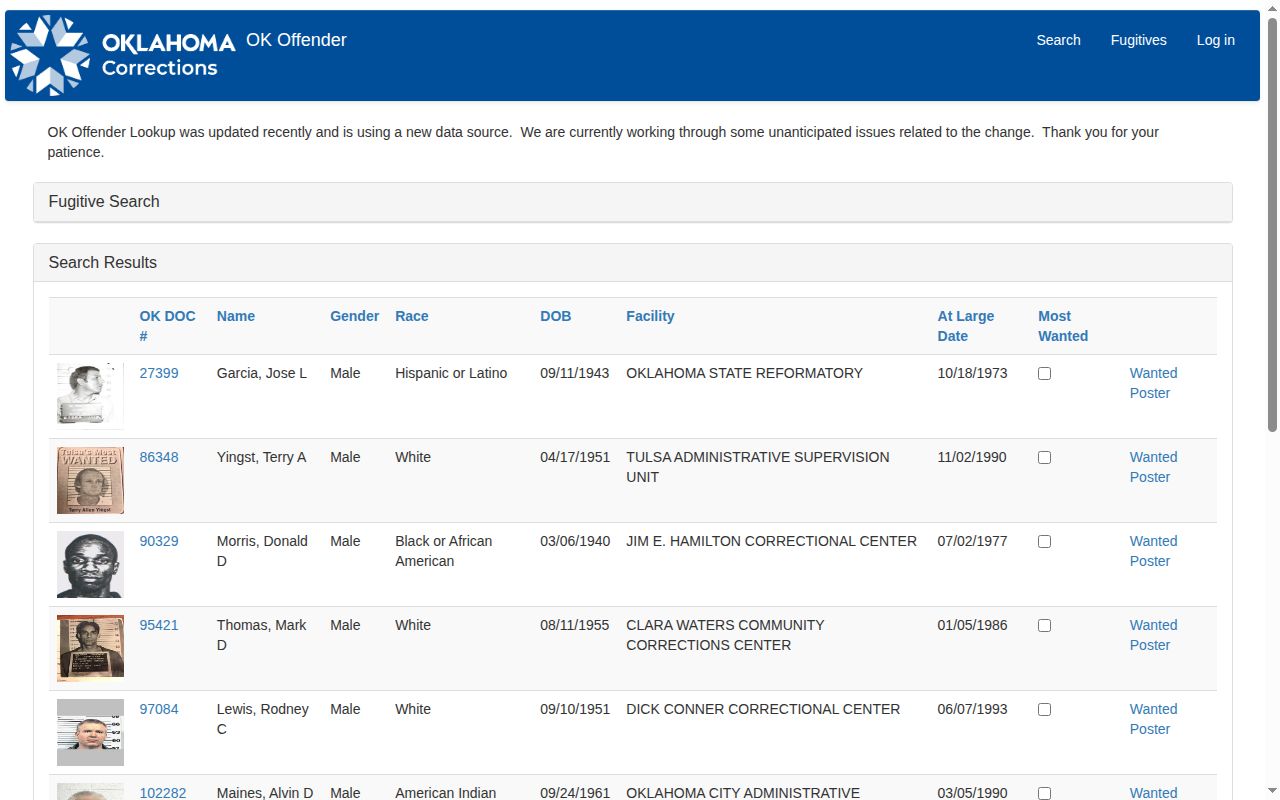
The separate interface helps keep an alleged supervision violation distinct from an ordinary offender-status result.
Note: Treat an absconder entry as a warrant lead and safety issue, not proof of a new crime.
Grant County Supervision Conditions
Conditions are the rules attached to parole or probation. Their exact terms come from the court order, parole certificate, and supervising agency, not from a general summary. They may address reporting, travel, programs, payments, or conduct when those terms apply. A violation allegation can lead to review, sanctions, a warrant, revocation, or return to custody, but the response depends on the governing order and official process.
Probation and parole violations follow different records. A Grant County probation case may show an application to revoke or accelerate in the court docket. A parole matter can appear in ODOC or PPB revocation material. The filing is an allegation until resolved. Read the order and outcome rather than treating a docket label as the result.
VINE has a narrower role. It can provide custody alerts from reporting agencies, but PPB expressly states that VINE does not give parole notice. PPB Victim Services handles Board hearing notice separately, while ODOC Victim Services maintains its own state procedures. One enrollment does not cover all three Oklahoma layers.
Grant County Supervision Discharge
Supervision ends through the controlling court or state process. A probation term may reach completion, be modified, or end through a later court order. A deferred sentence can lead to the statutory dismissed form after successful completion, while a suspended sentence follows its judgment and later orders. Parole ends when the state record shows completion or discharge. Leaving prison is only the start of parole, not the end of the sentence.
Use the final record. ODOC's Certificate of Release identifies the release category, cases, credits, and whether supervision remains. A later ODOC sentence history or authorized record can document full discharge. The court docket supplies the probation judgment and completion action. If an old public search no longer shows the person, request the state or court record rather than converting absence into a discharge date.
Sealing and expungement can lawfully change public access. Under Oklahoma law, Section 18 expungement can seal an arrest record, while Section 991(c) relief following a deferred sentence changes the public disposition in the prescribed way. That access change should be respected. It does not mean the historical custody event never occurred.